
Navigating the Pump: Decoding Australia's Petrol Types and Why Your Fuel Choice Matters
Welcome to Garage 50, where I’m dedicated to helping people make informed decisions about your cars and motorbikes, especially when it comes to keeping it fuelled. We know petrol prices in Australia are a hot topic right now, so I thought it might be useful to demystify the different types of petrol available, why their prices differ, and whether you can mix and match to save some cash!
Understanding Octane Ratings: The Key to Petrol Performance
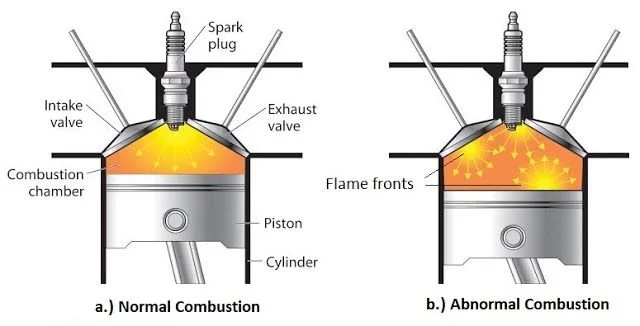
Before we explore the specific fuel types, it's essential to understand octane ratings. Everyone thinks they understand ‘octane’, but in my experience, there definitely is a bit of a knowledge gap that I thought I might help fill. Think of octane as a measurement of a fuel's ability to resist ‘knocking’ or pre-ignition in your engine. Knocking is essentially premature combustion that can cause engine damage over time. The higher the octane rating, the more resistant the fuel is to knocking.
For example, imagine your engine is a bicycle rider. To get the most power, the rider needs to push down on the pedal exactly when it reaches the top of its circle. Similarly, inside your engine, you have pistons that move up and down. To work perfectly, the petrol and air mixture should only ignite (or explode) at a very specific moment — right when the piston is at the top. This creates a smooth, powerful push that keeps your car moving.
Knocking (also referred to as pinging) happens when the petrol is too "unstable" for your specific engine. Instead of waiting for the spark plug to light it at the perfect time, the fuel gets incredibly hot and ultimately under pressure explodes too early. Imagine that bicycle rider again. Knocking is like someone hitting the rider's foot with a hammer while their leg is still moving upward.
The Sound
You might hear a metallic "rattle" or "pinging" sound from the engine, especially when you're accelerating up a hill. Naturally it will be soft in the beginning, but gradually get louder as the damage worsens over time.
The Damage
Because the explosion is trying to push the piston down while it’s still trying to move up, it creates a massive amount of stress. Over time, this can literally punch holes in engine parts or snap metal components. I recently disassembled a Kawasaki Ninja 650 engine to better understand what the issue was. I was amazed to have seen large metal components snapped inside the engine – it was not pretty!
How Octane Fixes It
This is where the numbers 91, 95, and 98 come in.
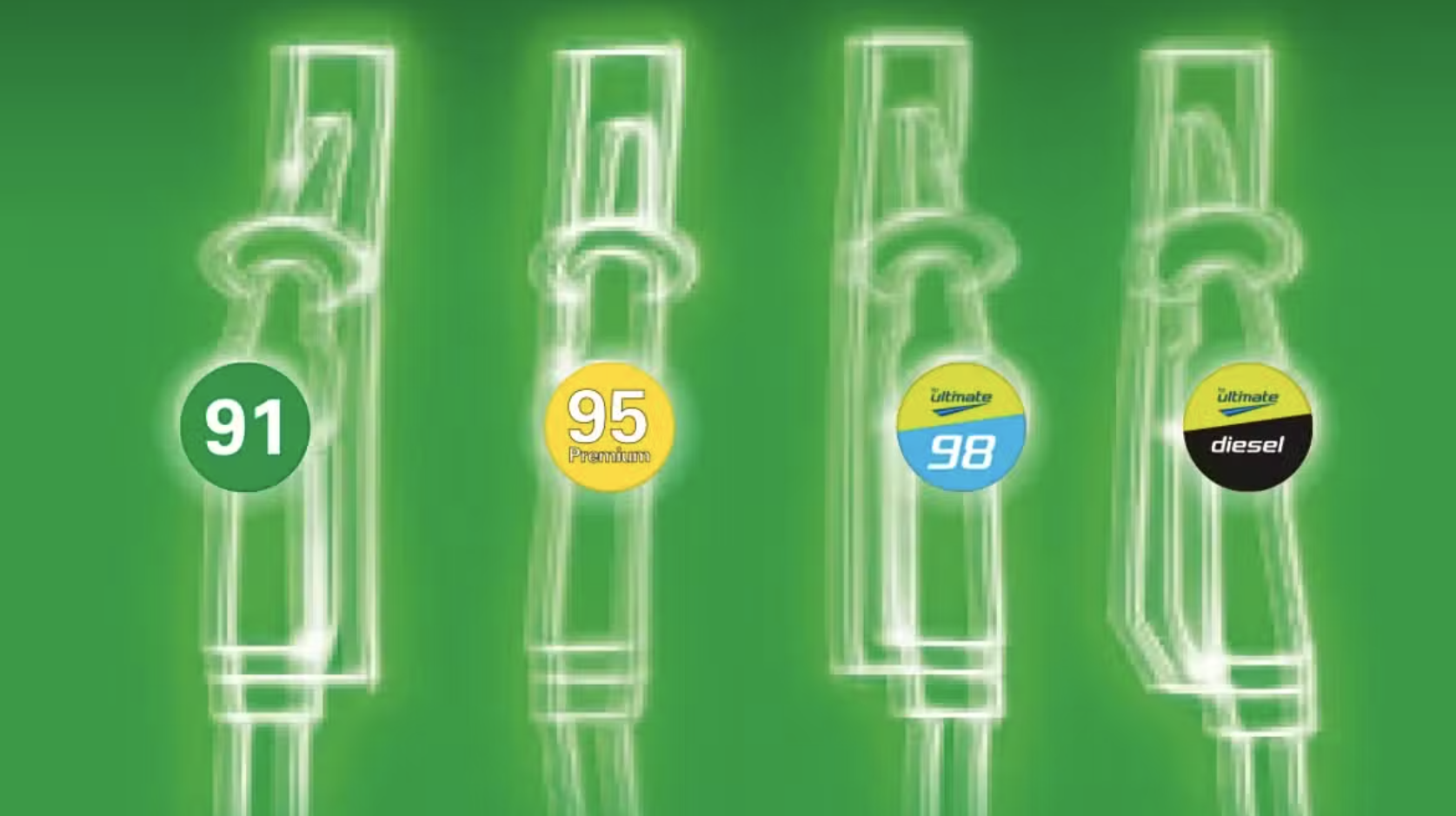
91 Octane is like a dry bag of twigs—it catches on fire very easily.
98 Octane is like a thick log—it’s much "tougher" and more stable. It refuses to explode until the spark plug tells it to.
High-performance motorbikes and cars (like many European models or Turbocharged cars) squeeze the fuel-air mixture very tightly. This creates a lot of heat. If you put 91 in those cars and bikes, the fuel can't handle the squeeze and explodes too early (knocking). By using 98, you’re using a fuel that is "strong" enough to wait for the right moment.
The simple takeaway: Octane isn't about "power" or "quality” despite what many Instagram enthusiasts will tell you —it's about stability. High-octane fuel is just harder to set on fire, which is exactly what a high-pressure engine needs to stay healthy.
In Australia, you'll primarily encounter three main octane ratings: 91, 95, and 98.
The Breakdown of Australia's Petrol Types:
Unleaded 91 (E10): The Most Economical Choice
What is it: A blend of unleaded 91 octane petrol and up to 10% ethanol. It's often the cheapest option at the pump.
What it does: Ethanol adds octane and can reduce emissions, making it an attractive choice for price-conscious drivers and those concerned about the environment.
Suitability: Most modern cars and bikes built in the last 15-20 years are E10 compatible. However, it's crucial to check your owner's manual or a reliable online compatibility guide to ensure your specific vehicle can safely use E10. Some older cars and high-performance engines are not designed for ethanol blends and will experience issues like reduced fuel economy or potential fuel system damage with long-term E10 use.
Premium Unleaded 95: The Performance and Protection Option
What is it: Unleaded petrol with a higher octane rating of 95 compared to regular unleaded.
What it does: Provides better resistance to engine knocking and pre-ignition. This translates to smoother engine performance, potentially slightly improved fuel economy, and better long-term protection for your engine components, especially in modern vehicles with high-performance or turbocharged engines that require higher-octane fuel to run optimally.
Suitability: Many modern cars, particularly those with turbocharged or high-compression engines, recommend or even require Premium 95. Using it can ensure your engine runs efficiently and prevents knocking that could cause damage. It's generally safe for most petrol vehicles, even those that don't strictly require it.
Premium Unleaded 98: The Ultimate Choice for High-Performance Vehicles
What is it: The highest-octane petrol readily available in Australia, boasting a minimum rating of 98.
What it does: Offers maximum resistance to engine knocking and pre-ignition, allowing engines to run with higher compression ratios and more advanced ignition timing. This unlocks the peak performance potential, smoother running, and best fuel efficiency (though typically minimal compared to 95) for high-performance, sports cars, motorbikes and turbocharged vehicles specifically designed to thrive on ultra-high-octane fuel. It also provides the ultimate level of protection against engine damage related to knocking.
Suitable for: Specifically required for many high-performance and luxury vehicles, sports cars, and some modern turbocharged engines and bikes. If your manufacturer explicitly recommends 98 fuel, using anything lower can lead to reduced performance and potential engine knocking and damage over time. It's generally safe for most other motorbikes and vehicles, but the benefits might be minimal unless your car is designed for high-octane fuel.
Why Are Petrol Types Priced Differently?
The price variations between the different petrol types generally reflect their octane ratings and additional benefits:
Production and Refining Costs: Achieving higher octane ratings (like 95 and 98) often involves more intensive and potentially more expensive refining processes to boost the fuel's antiknock properties.
Performance Enhancements and Engine Protection: Higher-octane fuels are formulated to optimise engine performance and provide greater protection against potentially damaging engine knocking. These added benefits are typically factored into the price.
Market Demand and Competition: Demand for regular unleaded is generally higher, leading to greater competition among retailers and potentially slightly lower prices compared to the smaller market for premium fuels.
Can You Mix and Match? The Ultimate Question
The golden rule when it comes to mixing petrol types is: ALWAYS follow your car manufacturer's recommendations. Your owner's manual will specify the required minimum octane rating for your engine. Using a fuel with a lower octane rating than recommended can:
Reduce Performance: Your car's computer might retard ignition timing to prevent knocking, resulting in noticeable power and acceleration loss.
Increase Fuel Consumption: Your engine might work less efficiently, potentially cancelling out any potential savings from choosing a cheaper fuel.
Cause Engine Damage: While modern cars have knocking sensors to minimise damage, using significantly lower-octane fuel consistently can still lead to knocking issues over time, potentially causing costly damage to internal engine components like pistons or spark plugs.
However, you can typically put a higher octane fuel into a car that requires a lower one without causing harm. For example, if your car recommends minimum E10 (Unleaded 91), you can safely fill up with Premium 95 or 98. However, unless your car or motorbike is specifically tuned or designed to benefit from the higher octane (which is generally not the case for most standard cars and motorbikes), you are unlikely to experience noticeable performance or efficiency improvements, making the extra cost less justifiable.
E10 Compatibility: The Specifics of Ethanol Blends
When considering E10, the compatibility aspect is crucial:
Check Your Owner's Manual: This is the most reliable source for your car's fuel requirements and E10 compatibility.
Online Resources: Many resources provide lists of E10-compatible and non-compatible vehicles. Ensure you're using a reputable and up-to-date source.
Consider Your Car's Age and Type: Generally, most cars manufactured in the last 15-20 years are E10 compatible. If your car is older or a high-performance model, it's particularly important to verify compatibility before using E10.
Final Thoughts from Garage 50:
Understanding Australia's petrol types allows you to make an informed choice that balances your budget with your car's needs. Remember, consistency is key – while occasionally filling up with a different type (especially if it has a higher octane) isn't likely to cause immediate harm (unless your car specifically requires a higher octane and you go lower), consistently using the wrong type, particularly a lower-than-recommended octane, can have negative consequences.
I hope this guide has been helpful! Safe driving and riding out there!